
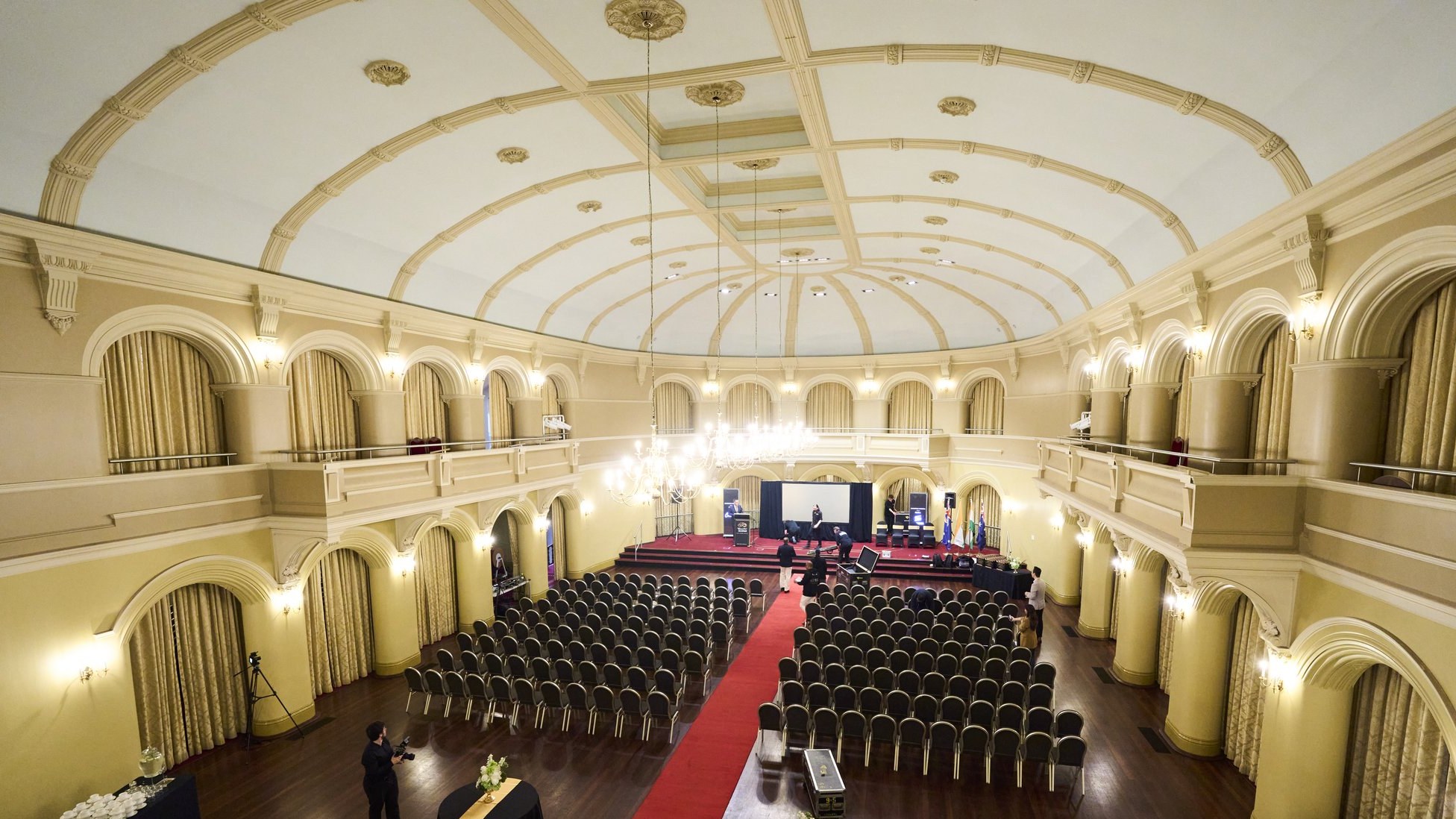
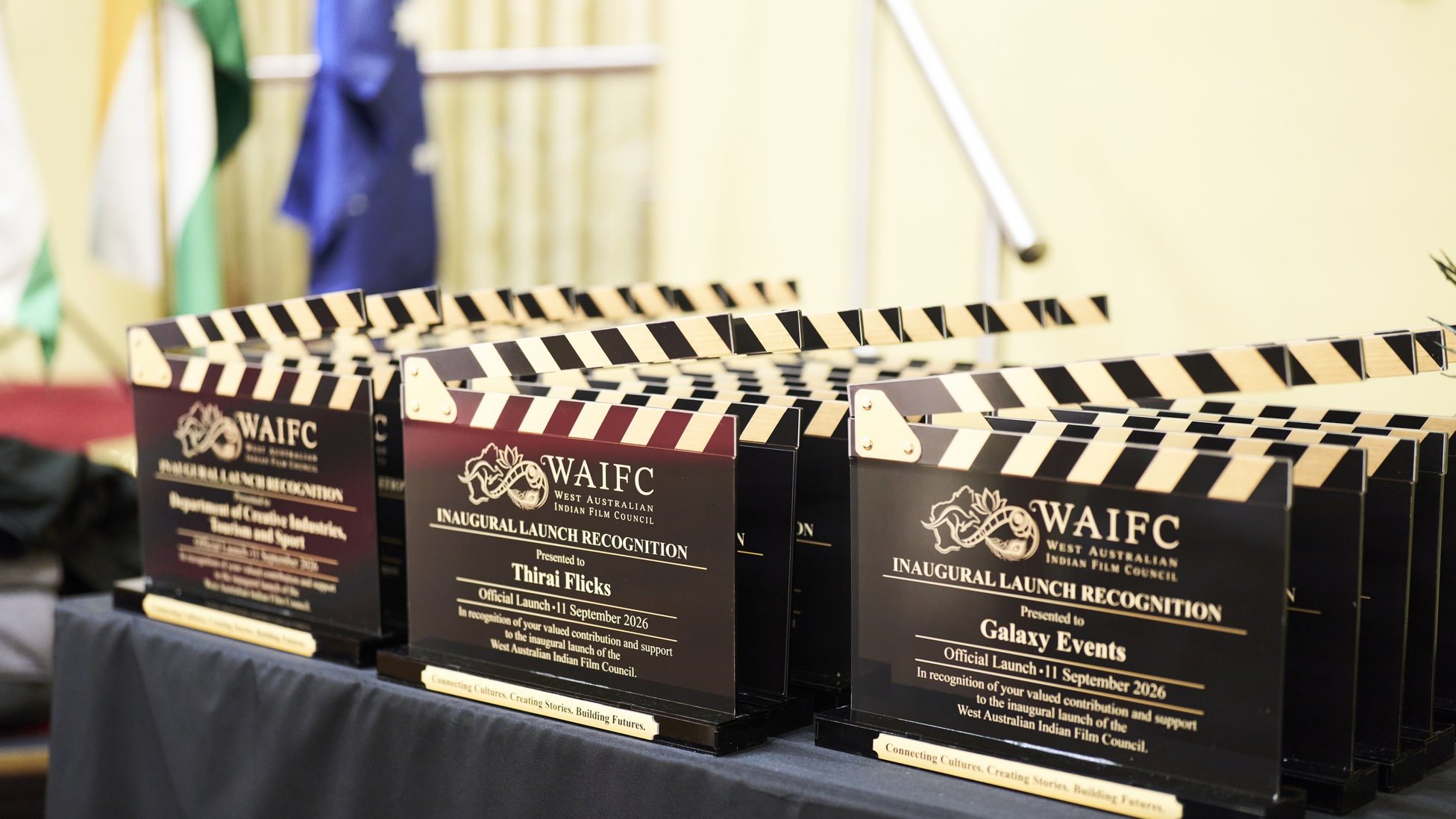
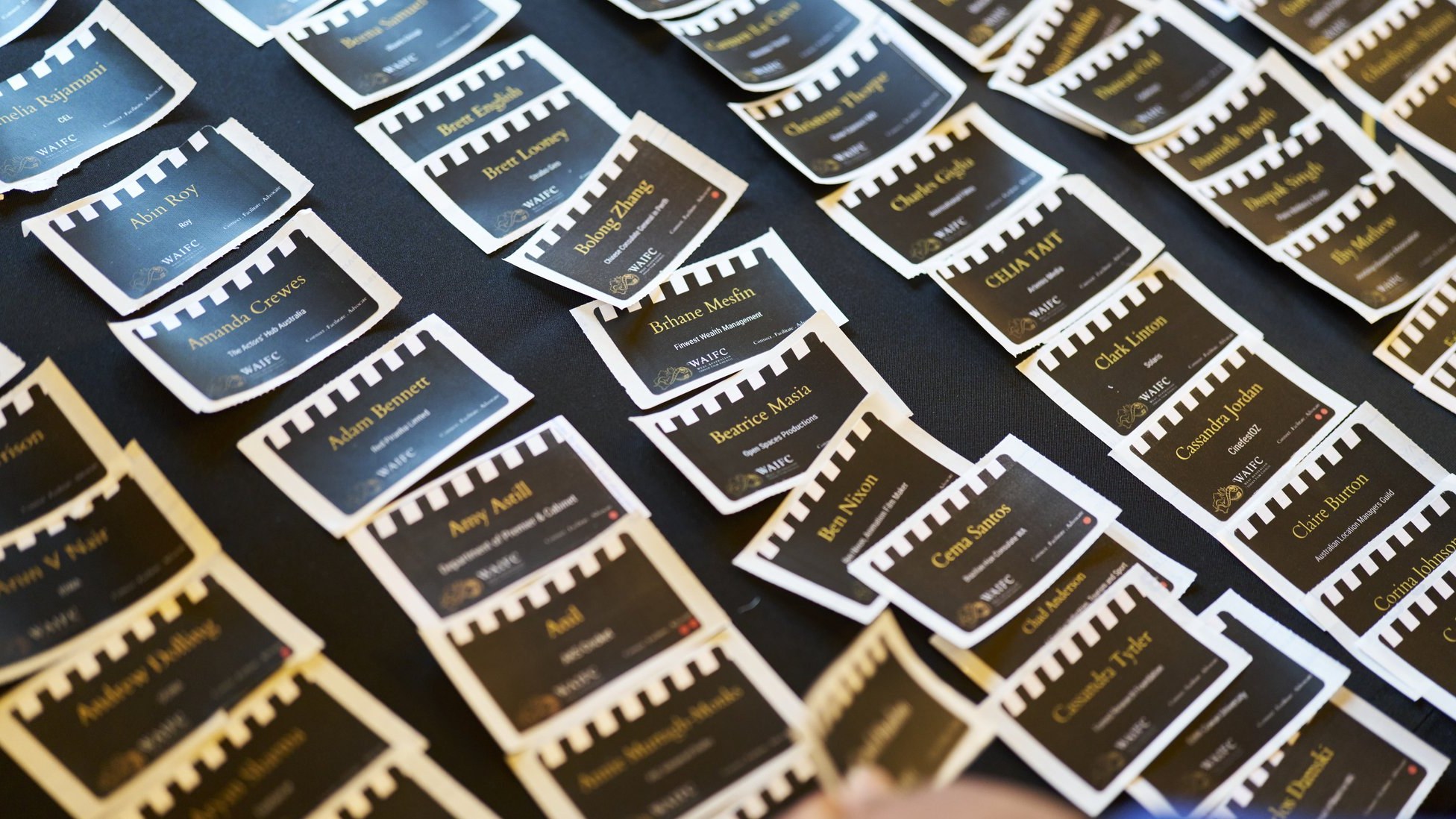
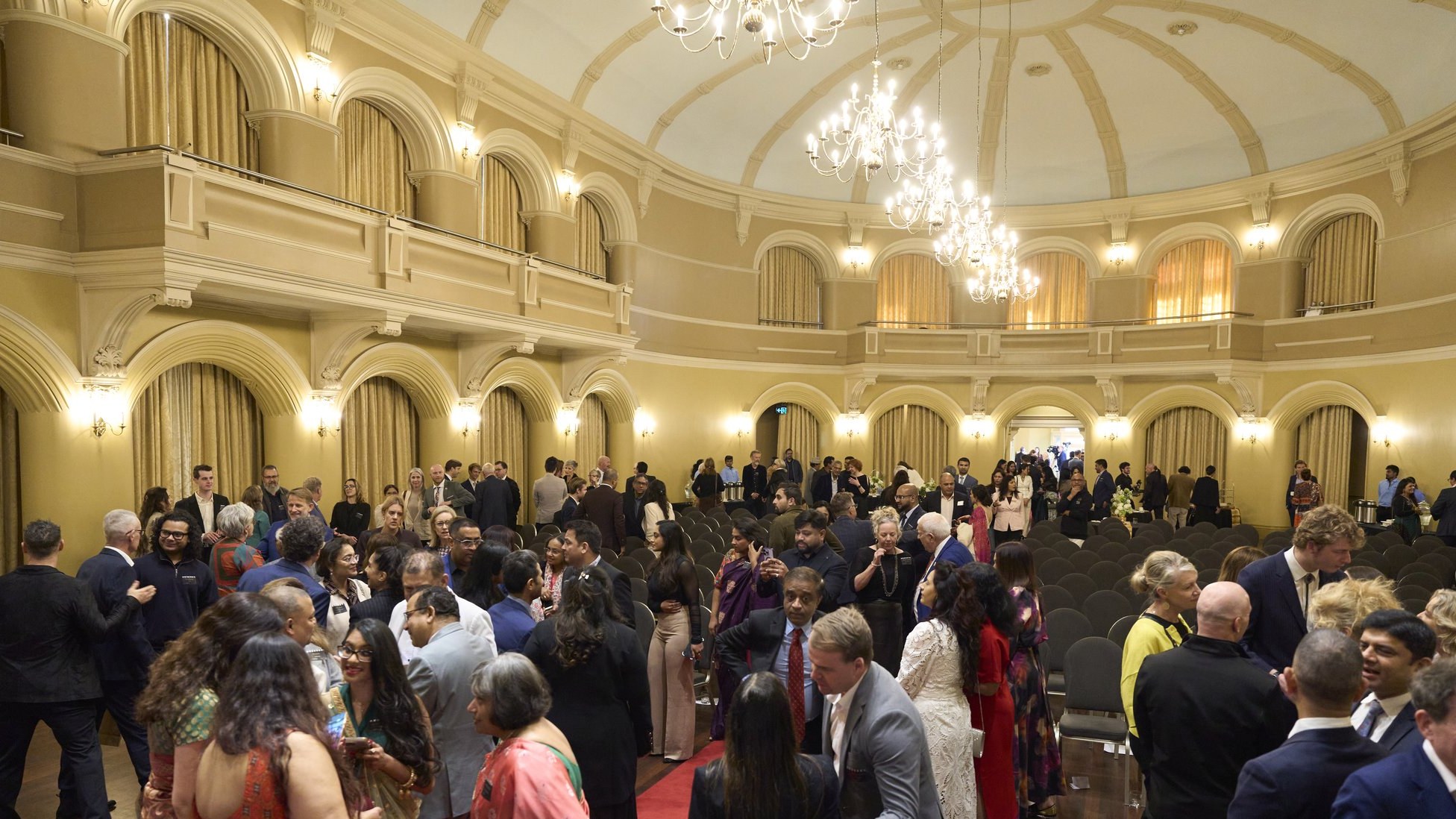
Early that Friday, the Government House Ballroom was all empty chairs and red carpet. Up the front, on a table draped in black, a row of clapperboards waited. Each one carried the name of an organisation that had backed a council which, officially, did not exist yet.
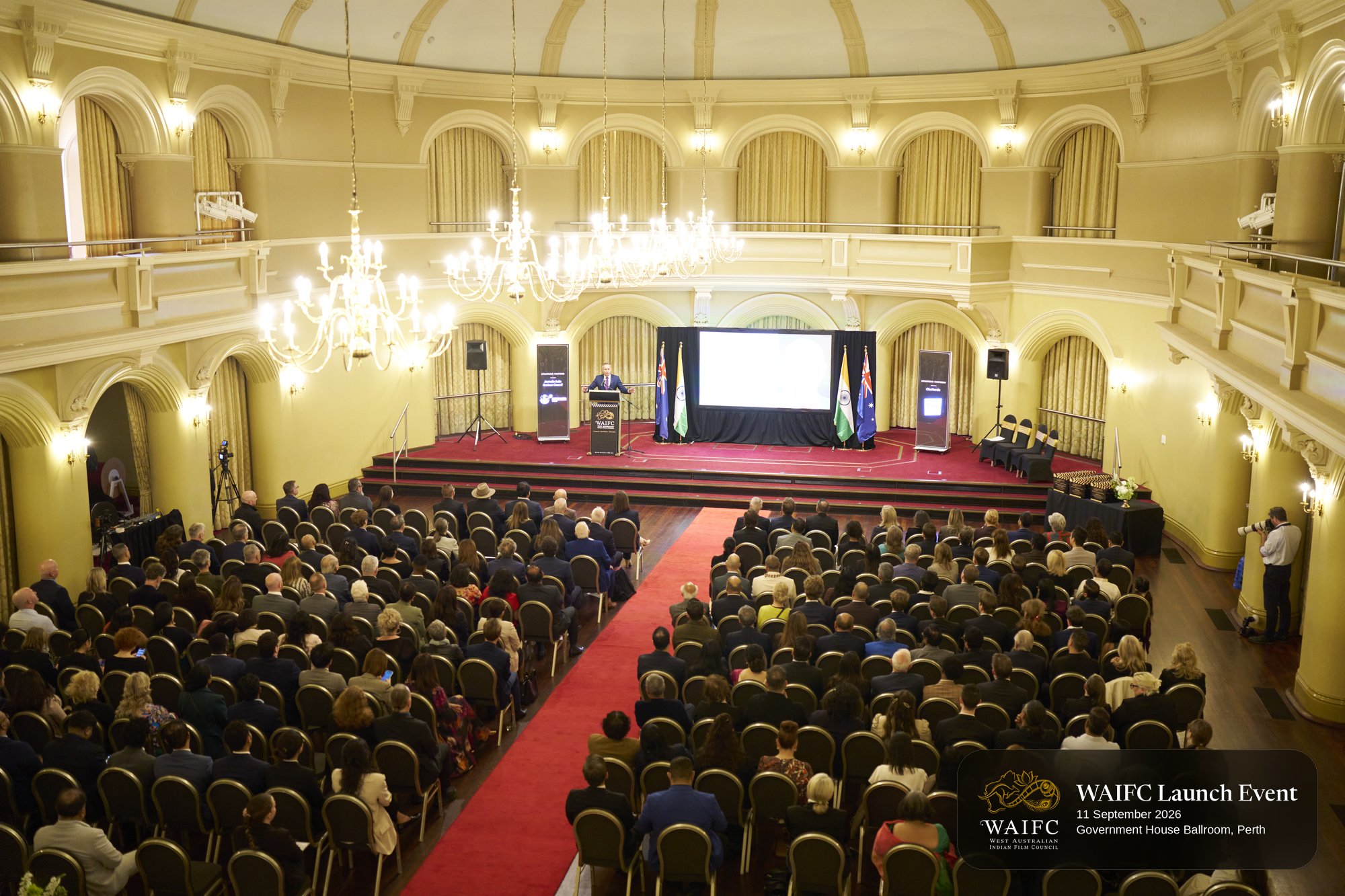
By the end of the morning it did. The chairs had filled with filmmakers, diplomats, ministers, students, business owners and a Noongar Elder in a wide-brimmed hat. The clapperboards had found their owners. And the West Australian Indian Film Council had been launched in a room that, as more than one speaker pointed out, felt a lot like a film set.
This is the story of that morning, told mostly in the words of the people who stood at the lectern.
“If it’s not on LinkedIn, it never happened”
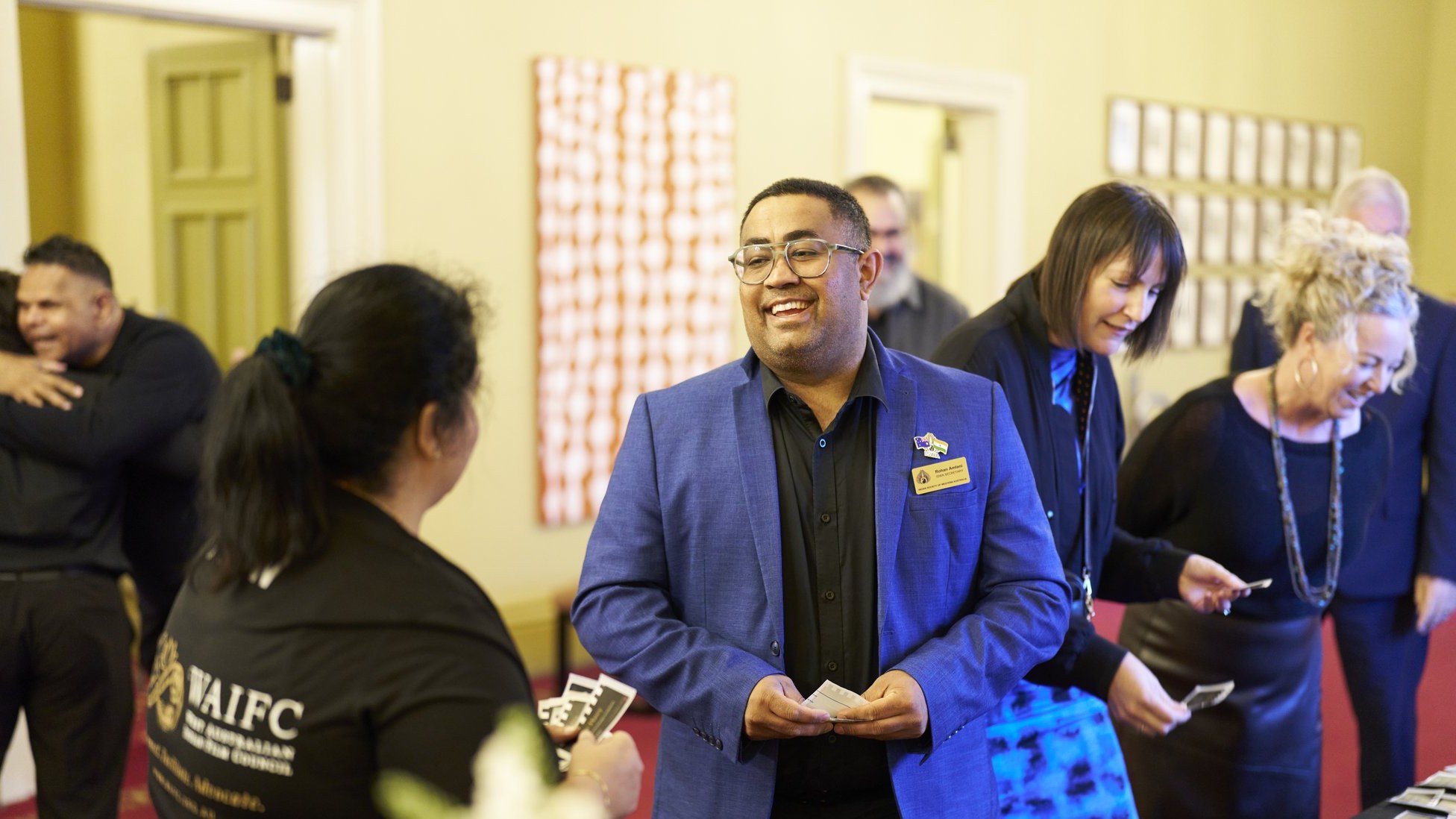
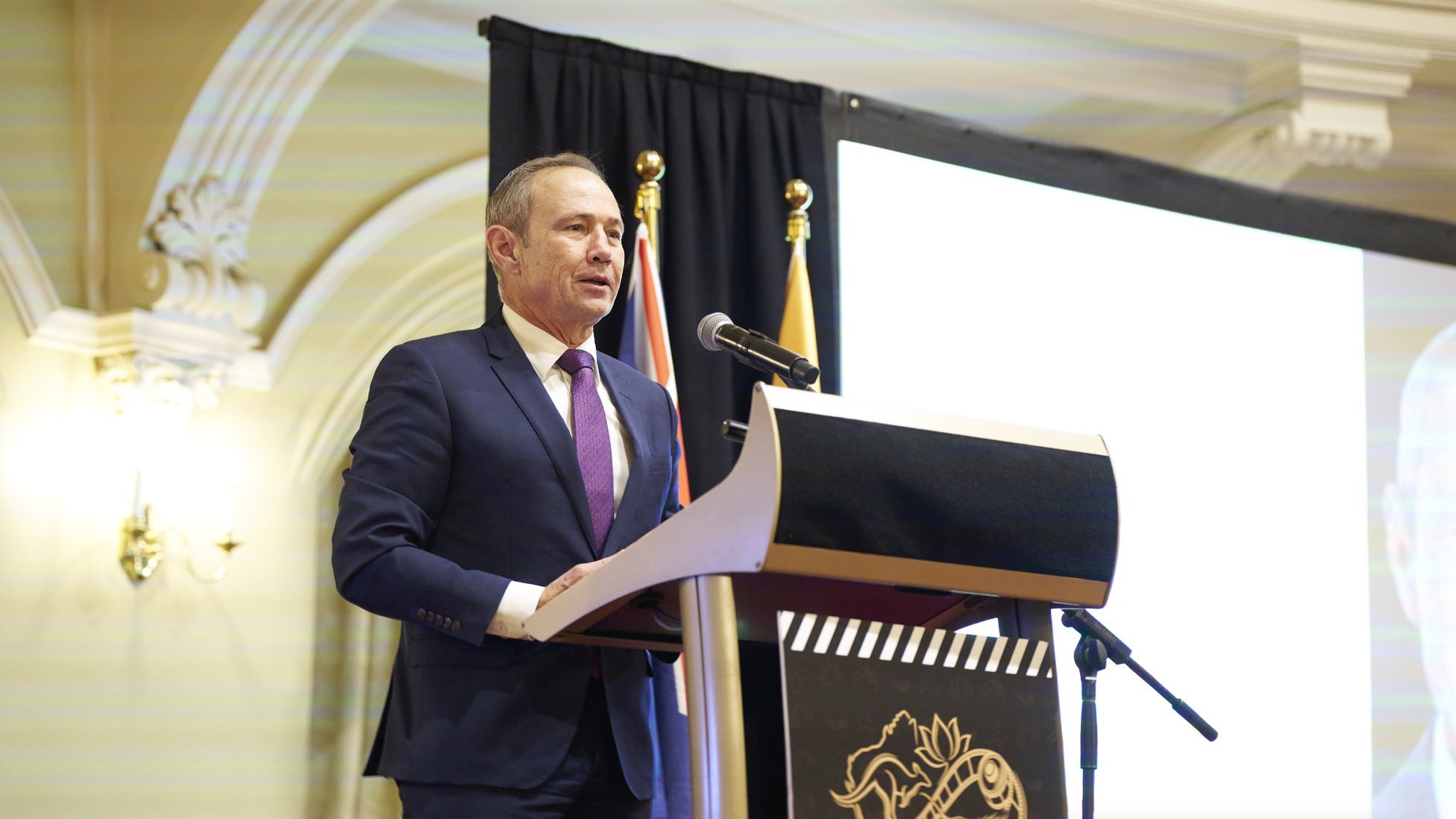
Our MC for the morning was Michael Carter, Head of International Trade and Investment Services at the Chamber of Commerce and Industry of WA. He set the tone in his first minute.
“I feel like I’ve been on a movie set in the last five, ten minutes.”
Then came the housekeeping, delivered the way only someone who has sat through a thousand events can deliver it. Phones on silent, not off. “We encourage you to take as many photos as you like. After all, if it’s not on LinkedIn, it never happened.”
Michael spent some 30 years in international trade, and he explained why a trade man had ended up at the opening of a film council. Creative industries, he said, are about “those people-to-people engagements”, about “bringing people together and bringing nations together as well.”
He also had a confession. Years ago, posted to Chennai as a trade commissioner, he went to collect his son Rahul from an after-school party. A very courteous gentleman answered the door, they had a pleasant chat, and Michael thought nothing more of it. Back home, his wife told him who he had just been chatting to.
“Ladies and gentlemen, that afternoon I’d actually met the screen legend Kamal Haasan.”
“Put your seatbelts on”
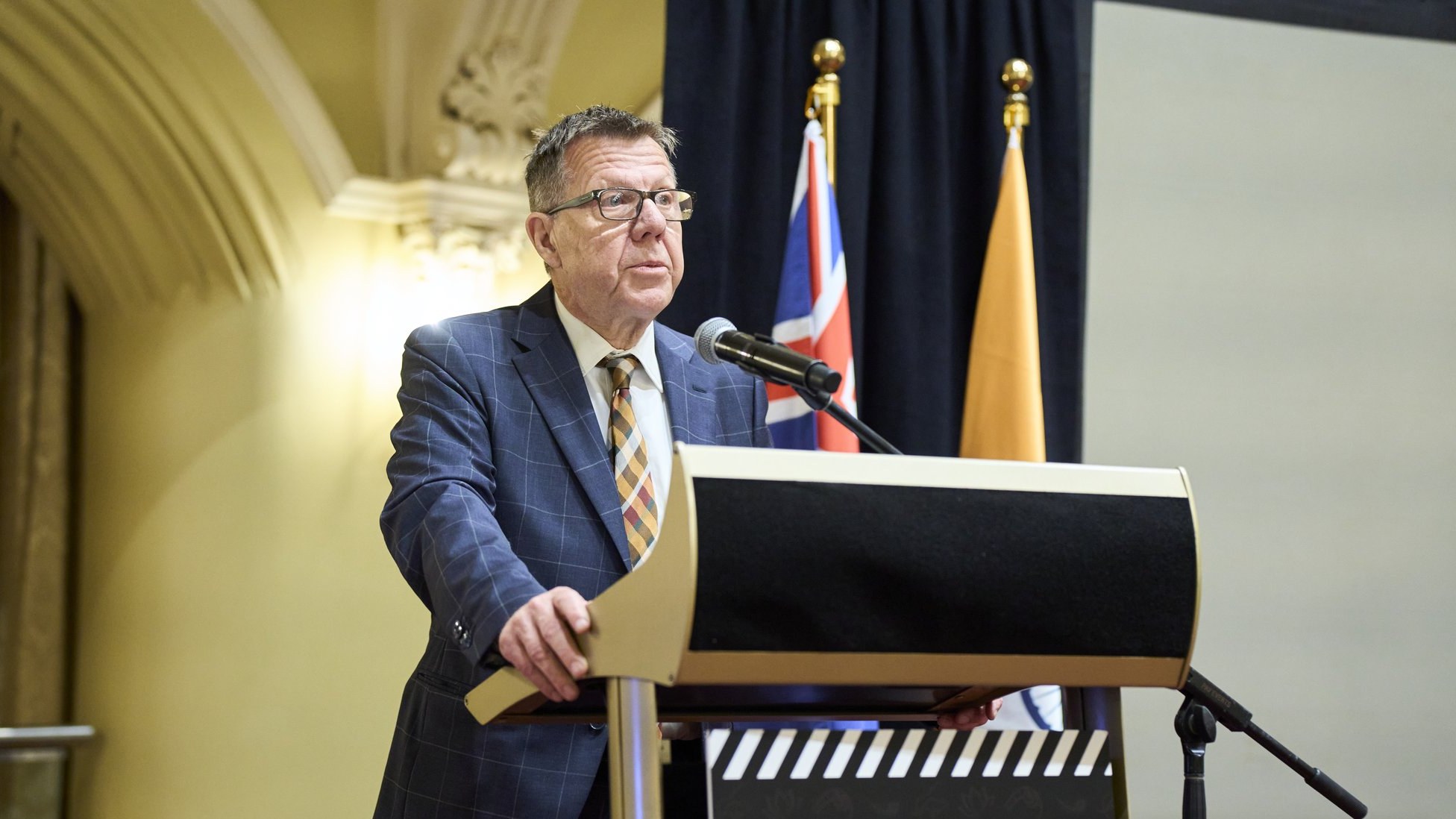
Dr Noel Nannup, the respected Noongar Elder, came to the lectern to deliver the Welcome to Country. He started by admitting the setting was not quite what he was used to.
“I prefer smoke wafting in, nice warm fire, smelling the wood burning, knowing that my ancestors are right there all around the fire with me.”
Then came the line of the morning.
“Folks, we are the greatest and longest storytellers on the planet. And if you’re into storytelling and film and getting down this path, put your seatbelts on.”
He singled out the Minister for Creative Industries, the Hon Simone McGurk MLA, as the only politician in the room who had heard one of his stories in its complete version: two hours every Thursday night, over four weeks, in Fremantle. He greeted Nilesh Makwana as an old friend. And then he asked the room to go quiet while he sent the bad spirit away. In the silence that followed, he explained, a void is left, and “that void can only be filled by a good spirit.”
He invited that spirit in to sit with everyone, gently, and told us she had brought the ancestors with her “to celebrate this incredible occasion.”
A Perth-born stunt queen
After the Welcome to Country, the big screen played a short clip, and Michael explained who the woman in it was. She was Mary Ann Evans, known to Indian audiences as Fearless Nadia, and by most accounts she was born right here in Perth in 1908. In Hunterwali (1935) she played a masked, whip-wielding adventurer who rode horses, fought villains and did her own stunts, and she helped define one of Indian cinema’s earliest female action roles.
It was a good reminder that the link between Western Australia and Indian film is not new. Some of it is nearly a hundred years old.
Thirty-eight cameras
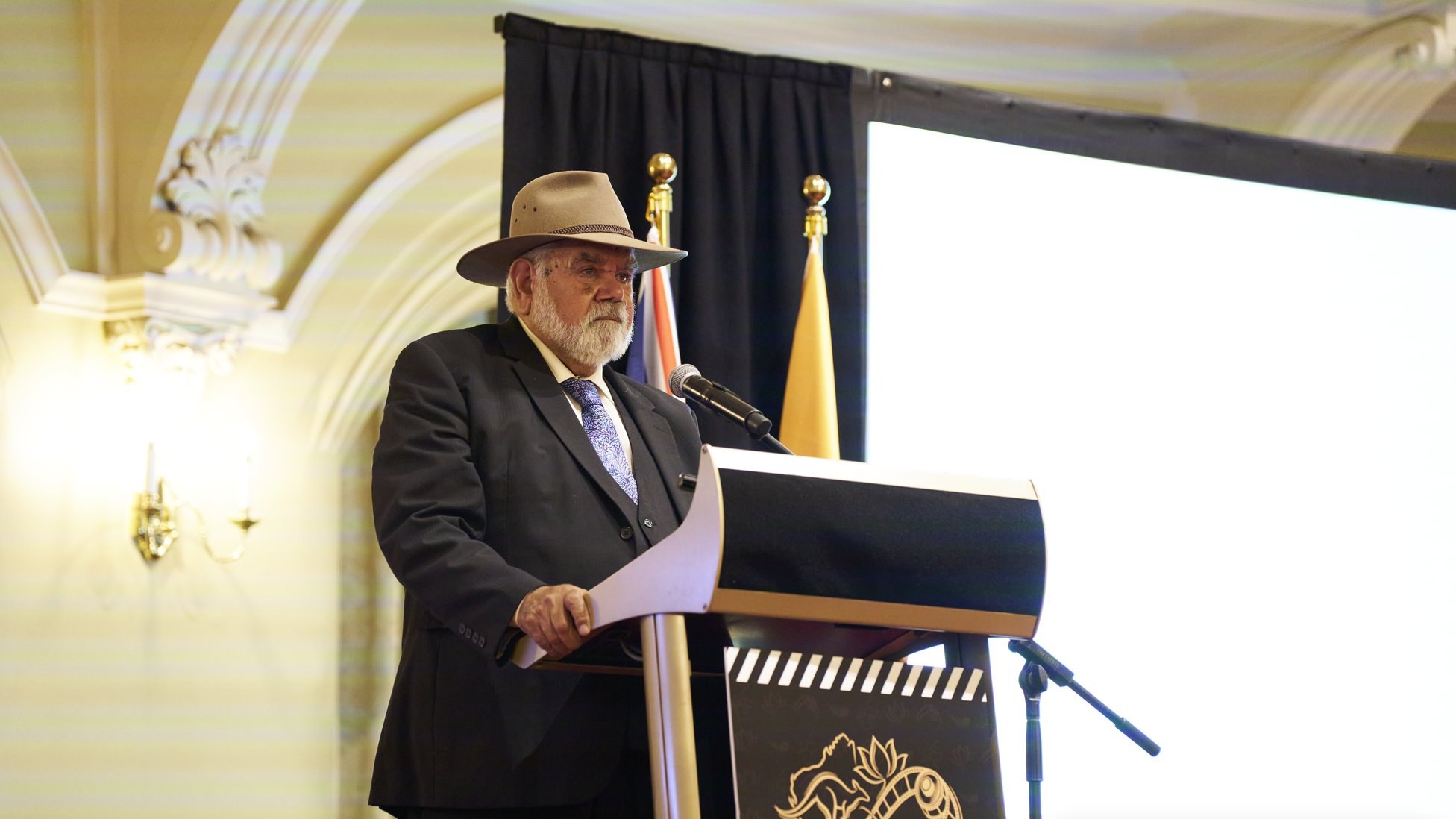
The Premier of Western Australia, the Hon Roger Cook MLA, got straight to the point.
“The Indian film industry is the biggest in the world in terms of production and ticket sales, and that means the opportunities in WA are, quite frankly, enormous.”
He spoke about the $290 million Perth Film Studios, completed earlier this year, with four sound stages and the largest backlot in the Southern Hemisphere. Then, with the honesty that tends to win a room: “As someone who knows nothing about films, I don’t even know what that means.” He had, however, been told the backlot is 22 per cent larger than the turf at Optus Stadium. “I guess that’s a good point of reference.”
His best story was from Chennai in 2022. He was at a workshop with the Tamil Nadu film industry, in a smallish room, when the cameras started arriving. One, two, three, four, five. By the end it was standing room only. While a speaker addressed the media in a language other than his own, the Premier did what you do at press conferences: nodded wisely, and quietly counted the cameras.
There were 38. “The biggest press conference I’ve ever been to in my life,” he said. “I don’t think there are 38 cameras in Western Australia, but I reckon we should aim for that.”
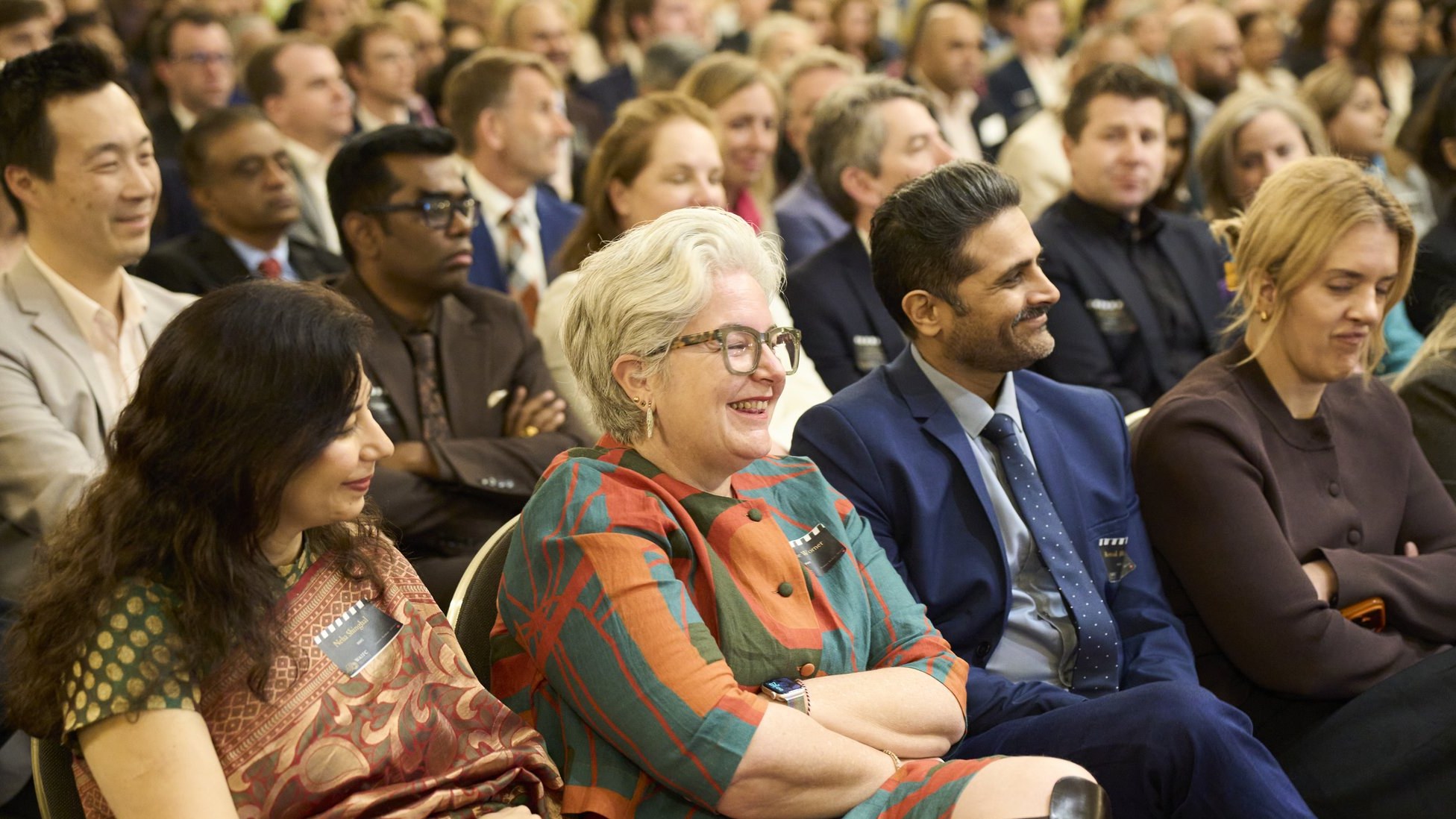
He closed by saying screen content has “an extraordinary ability to build connections between people and places”, and that he looked forward to seeing the Council’s work in the years ahead, “hopefully with a box of popcorn.”
“We are open for business”
The Hon Simone McGurk MLA, Minister for Creative Industries, began by thanking Dr Nannup and remembering that time on Ray Avenue, listening to him around the campfire.
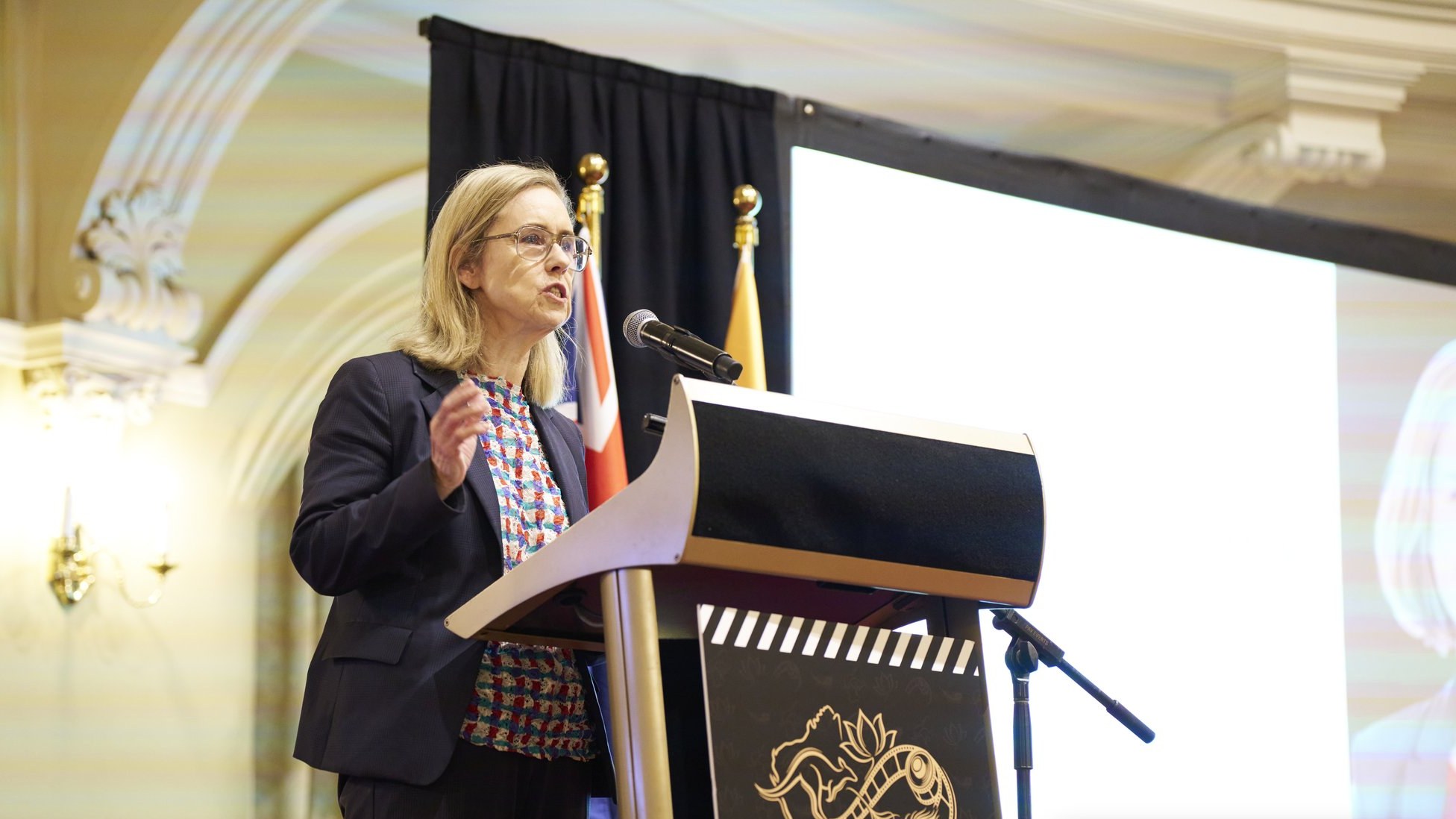
Then she spoke about where Western Australia’s screen industry is heading, and how fast. Free tickets for the Perth Film Studios open day had been snatched up within four hours. Schools were sending students to a careers day at the studios that same morning.
“We are sending a message that we are open for business. We have got a tradition of good filmmaking here in Western Australia, but we really want to take that up a notch.”
One line from her speech is worth sitting with. “Something about our isolation here has really engendered some fantastic talent.” Western Australia’s distance, in other words, may be one of its creative strengths.
“A new pivot”
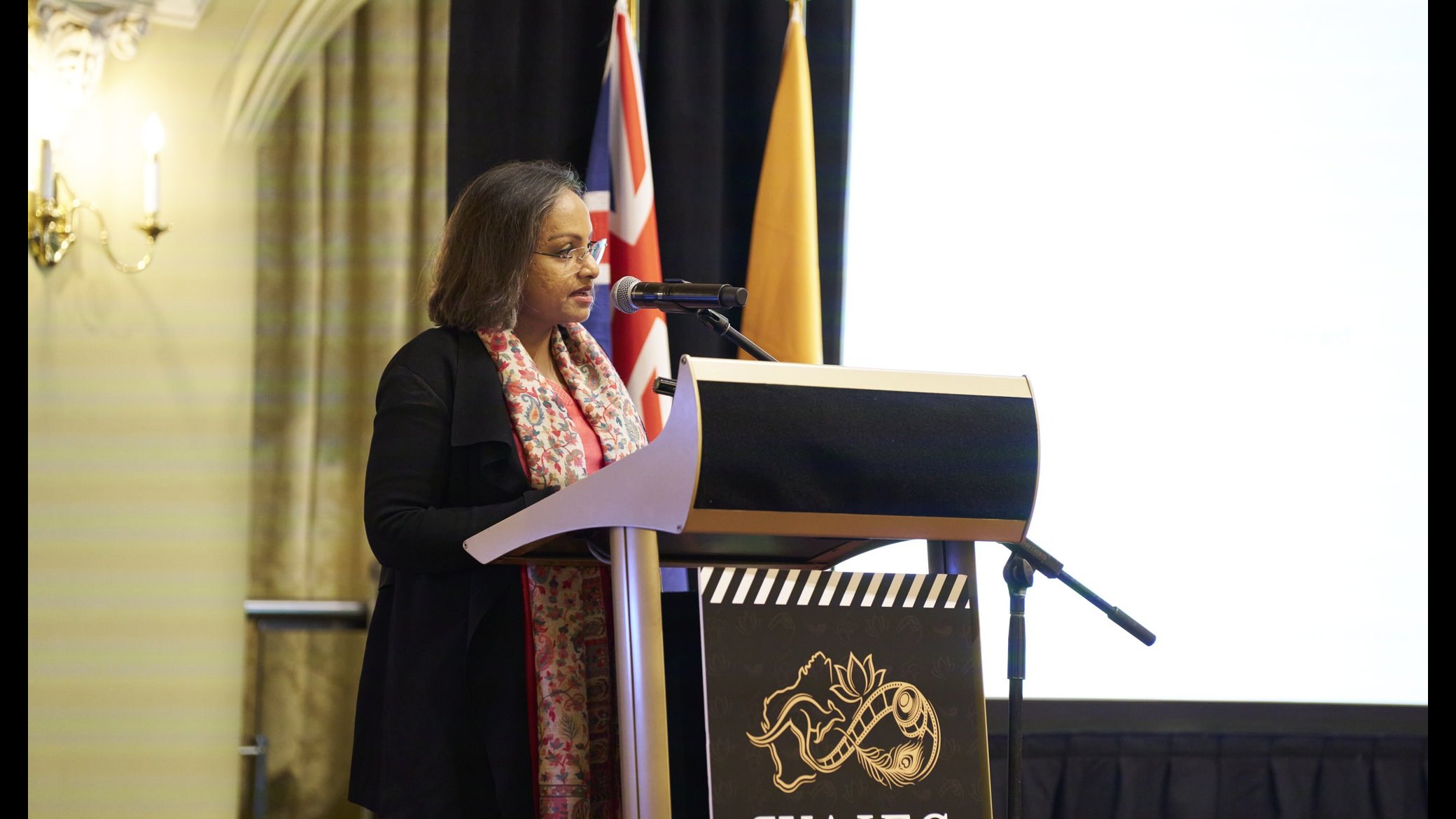
Ms Kajari Biswas, Consul General of India to Western Australia and the Northern Territory, described the Council as “the brainchild and passion” of Nilesh Makwana, “a good friend and respected entrepreneur with a passion for the arts and culture.”
She also made a point about Perth’s own Indian community: it is not just an audience for Indian film. Many people here are “organically connected” to the film industries of Mumbai, Andhra Pradesh, Kerala, Tamil Nadu and Punjab “through friends, family and business interests.”
“In short, it can become a new pivot in India–Western Australia relations. It can connect Western Australia to the world’s largest film industry.”
A video message followed from the Lord Mayor of Perth, Bruce Reynolds, who was, in Michael’s words, “on location”. The City of Perth is an inaugural member of the Council, and the Lord Mayor described the City’s role simply: “to connect, to facilitate and to advocate.”
Michael could not resist reading between the lines. Perhaps, he suggested, there was a sister-city partnership with an Indian city somewhere in the future, maybe in tandem with a direct flight. Then, to himself, out loud: “Oh, why did you say that, Mike?”
The squeaky wheel
Michael has known Nilesh Makwana for about ten years. At a book launch in New Delhi, he once summed him up with three P’s: perseverance, passion and purpose. For this launch he updated it to three C’s: connection, culture and cinema.
Nilesh, the Council’s Chair and Director, did not start with a vision statement. He started with thank-yous, and with stories about the people who made the morning possible.
He called the Premier his Lord Ganesha. “I don’t start anything without him being present.” He said that when he was new in town, someone told him you have to be a squeaky wheel to get things done. Later he learned another Australian word, ridgy-didge: do good, do what you say, “and don’t take money and run away. Deliver.”
He thanked his business partner, Vincent, who has barely seen him for three months and seems quite happy about it. “He said, thank you, stay away from us, because if you are with us, you create more work for us.”
And he talked about Ian Hale, who signs his emails with “little things, big things grow”, and who was his first backer. “Ian says, mate, I believe in you. Let’s do it.” Nilesh compared him to a father pushing a child off on a bicycle: a good shove to get you going, then you work out the rest yourself, including how to stop.
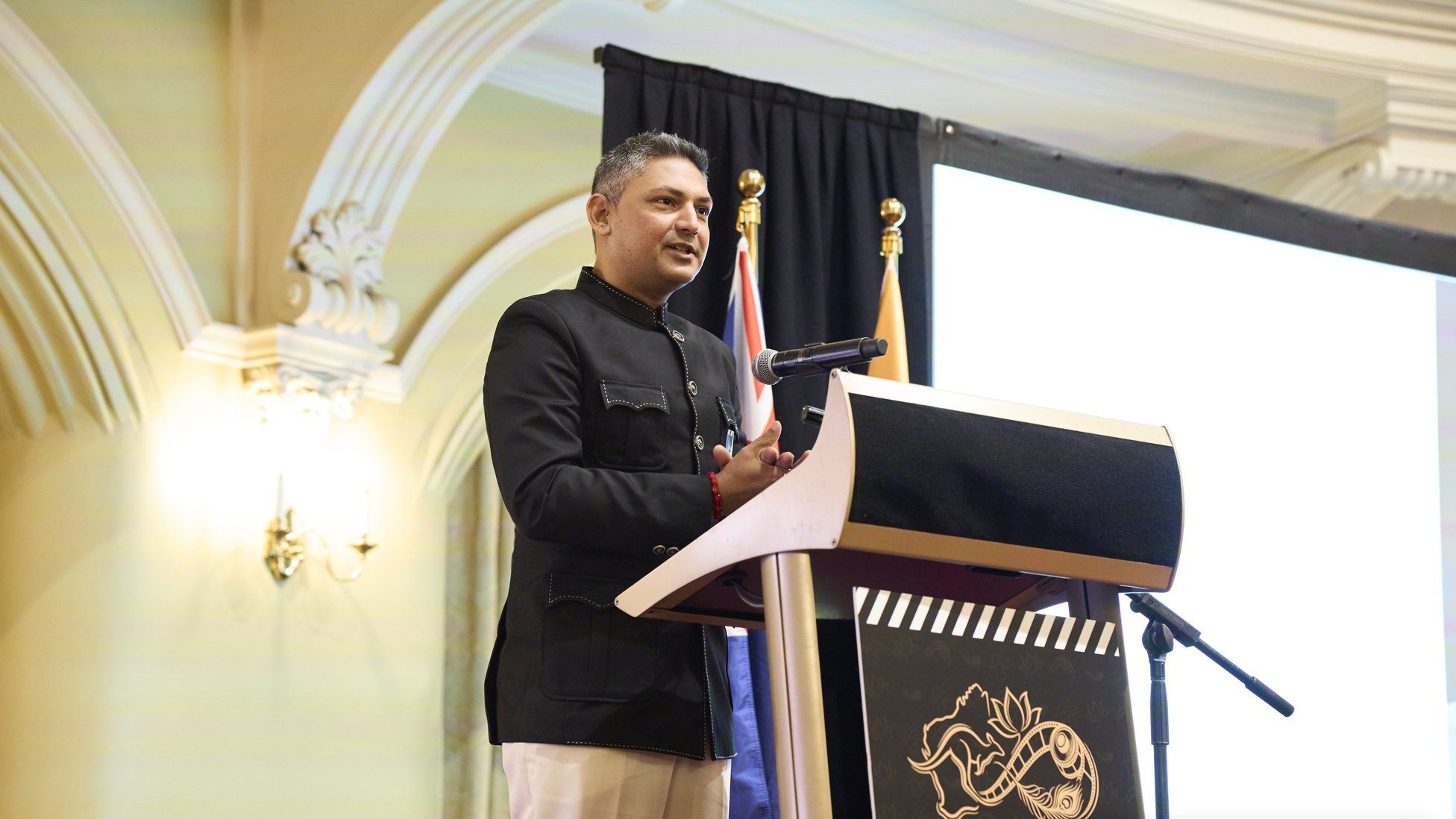
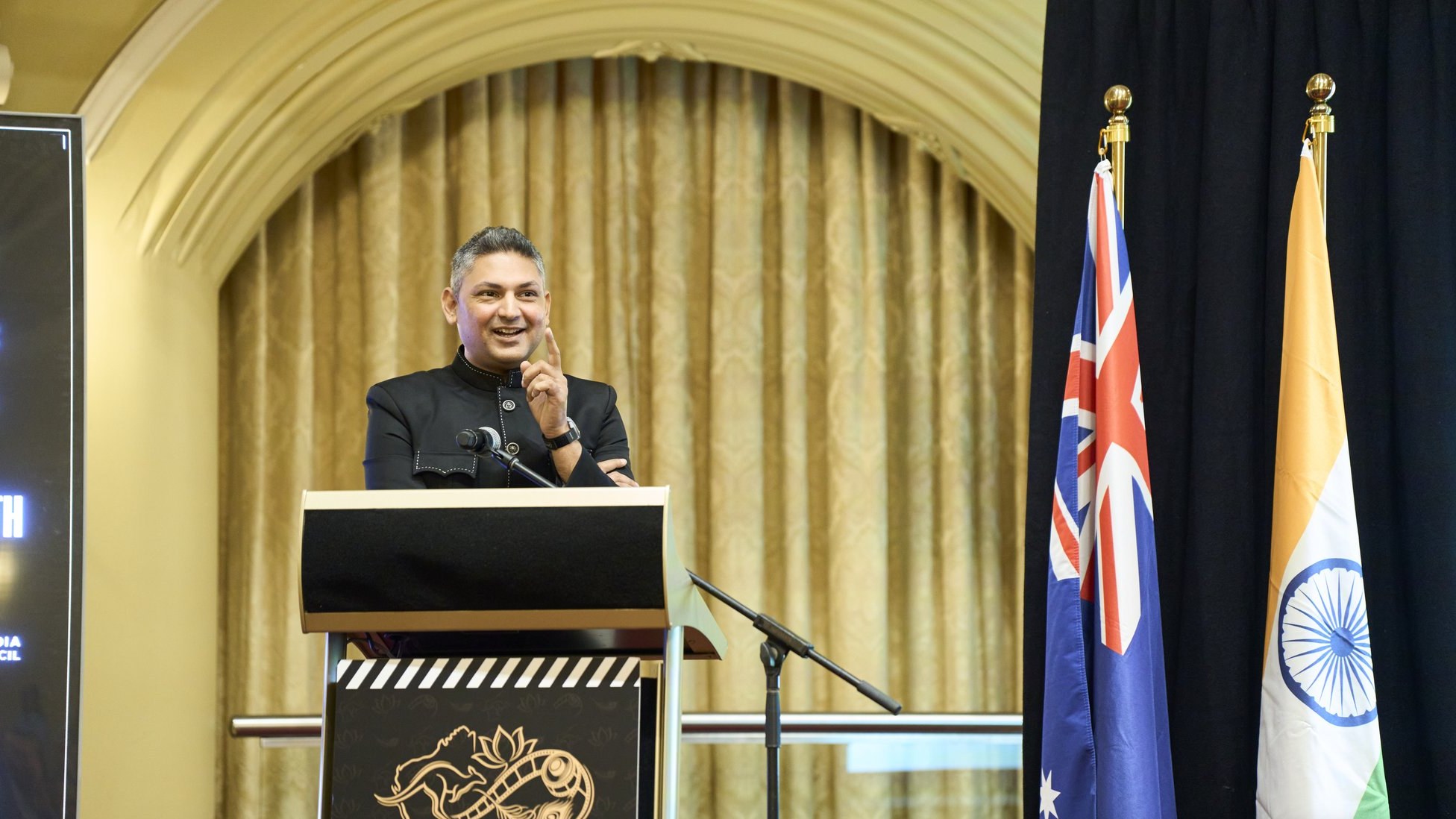
When he got to the purpose of the Council, he was blunt about what it is not.
“It’s not about co-production. It’s not about just bringing somebody to shoot here in WA. It’s about culture and the arts.”
Western Australia already shares food and cricket with India, he pointed out, “but we haven’t been enjoying that much of the film.” A direct flight is coming, “but we need more than a direct flight.” What he wants is people moving both ways, telling stories in both places, and Western Australian talent selling into India’s market, not just Indian productions visiting ours. “It’s also not just import, but it’s also export, which is bigger.”
He was honest about the risk, too. “We might do a great launch and we disappear.” Holding a launch at Government House meant paying for insurance, security and more, and some partners with no connection to film at all simply offered to cover the bills. “It’s quite humbling,” he said. “But at the same time, it’s scary, because there is a faith and trust on this council and me, and we have to deliver this now.”
Why clapperboards
Nilesh has a personal rule. If someone gives you your first job, or your first leg up, you never forget them. The clapperboards were the Council’s way of keeping that promise to its founding, strategic and supporting partners.
But he was clear that this was a symbol, not a finish line.
“Actual clapboard, when the movie will get shot, might take a few years... but we can do it collectively together, and make sure that someday we’ll see Indian film here actually doing a clap.”
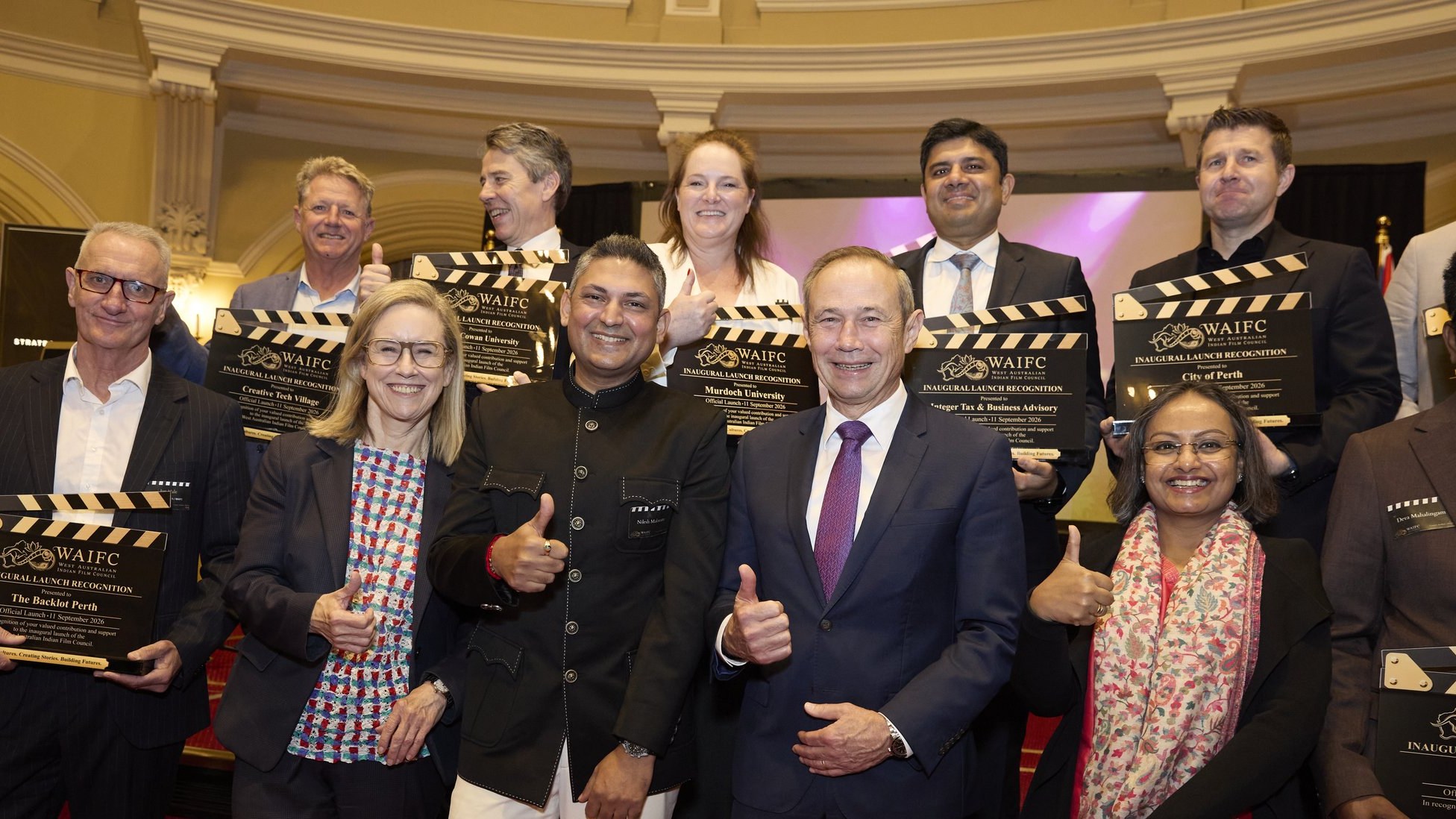
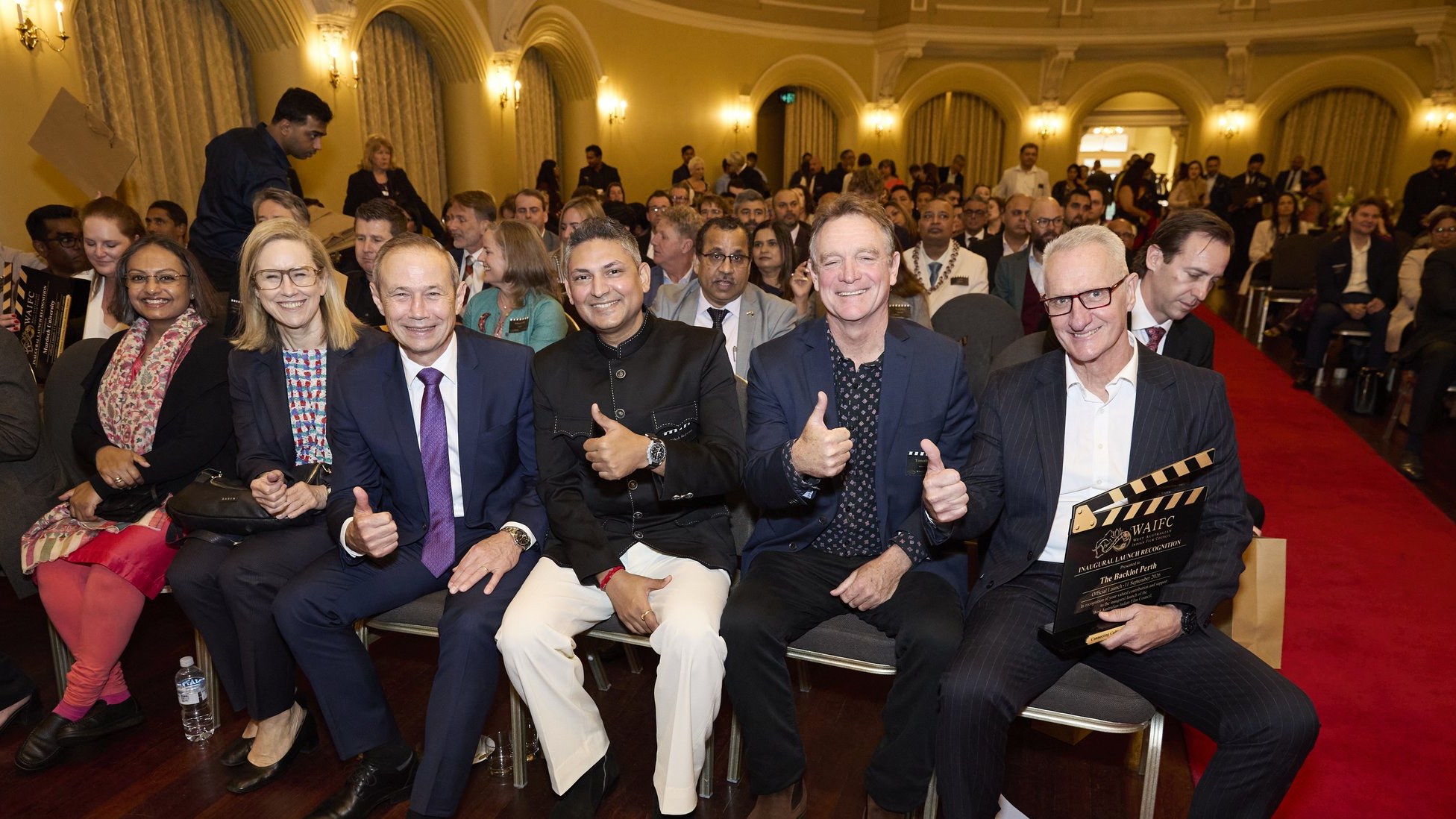
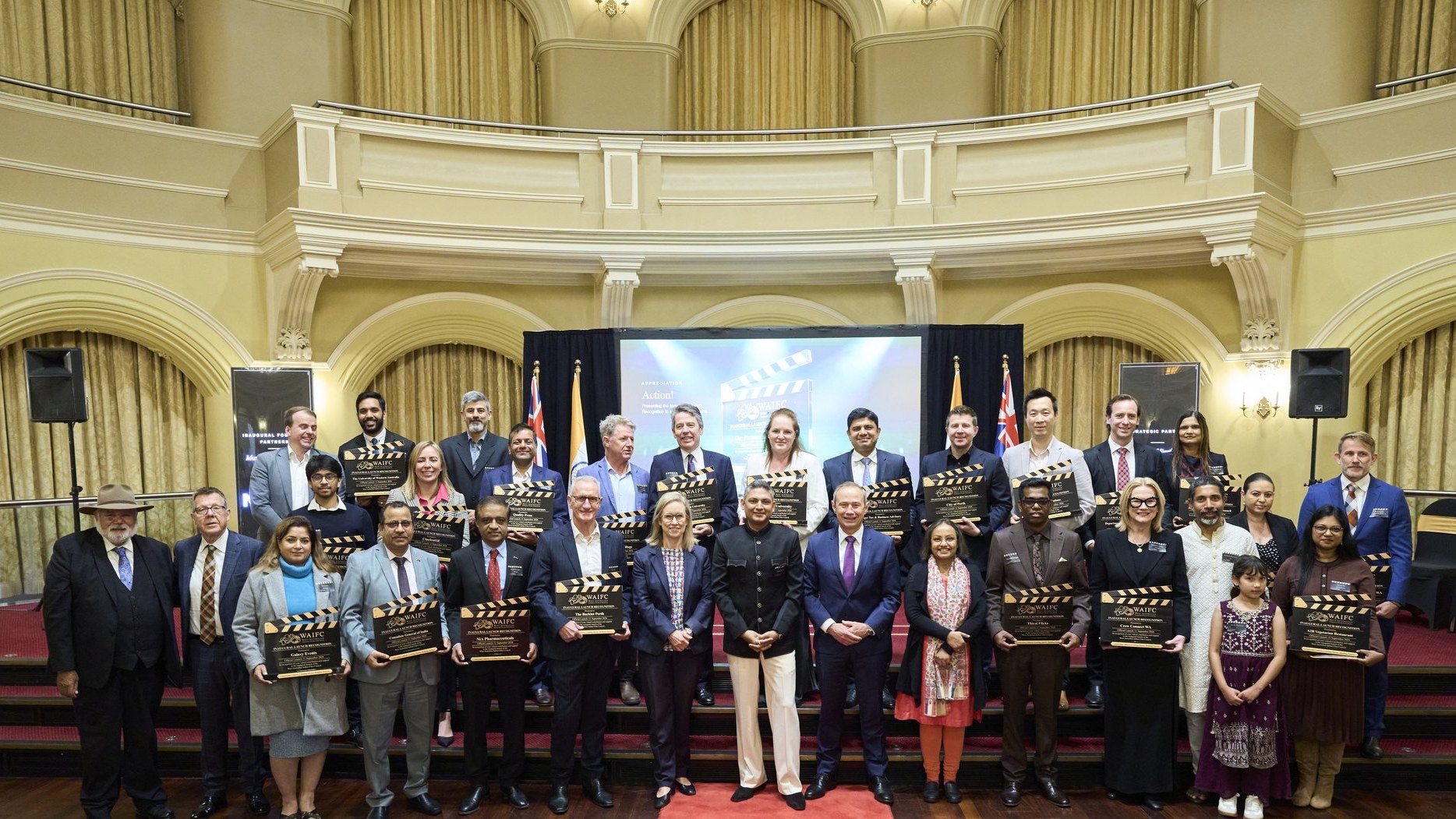
The partners came up group by group, clapperboards in hand, until the stage was full. Michael bunched everyone up for the photo, then declared it done in the only appropriate way: “I think we can say that’s in the can.”
What the ocean does
India produces somewhere between 1,500 and 2,000 films a year, in many languages. Western Australia has a new studio, a growing community with family ties to India’s film cities, and now a council whose job is to connect the two.
Michael had the last word, and it is a good one to end on.
“At the end of the day, the Indian Ocean doesn’t separate India from Western Australia. It actually connects us.”
Watch every speech from the morning on our YouTube channel:
- The full launch event
- Launch highlights
- Michael Carter, welcome address
- Dr Noel Nannup, Welcome to Country
- Hon Roger Cook MLA, Premier of Western Australia
- Hon Simone McGurk MLA, Minister for Creative Industries
- Ms Kajari Biswas, Consul General of India
- Lord Mayor of Perth, Bruce Reynolds
- Nilesh Makwana, Chair & Director
Thank you to everyone who filled the ballroom, and to every partner who said yes before there was anything to say yes to. Little things, big things grow.
Want to partner with WAIFC?
Get in touch